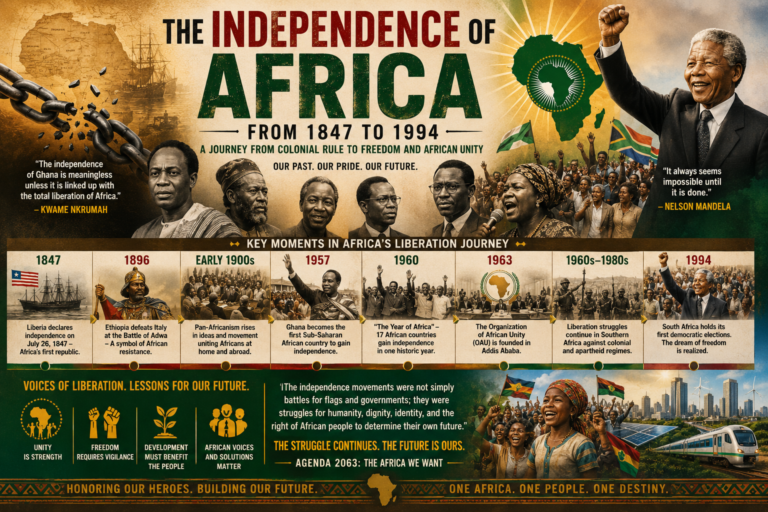

South Africa’s democratic journey is one of the greatest political achievements of the twentieth century. Yet, more than thirty years after the birth of constitutional democracy, millions of citizens continue to experience poverty, unemployment, inequality, crime and limited economic opportunities. These realities have renewed debate about how South Africa should complete its transformation and build a society that is economically inclusive, socially just and culturally confident.
One concept that continues to shape this debate is the National Democratic Revolution (NDR). While the NDR has historically been associated with South Africa’s governing liberation movement, its objectives and implementation are widely debated. Understanding the NDR alongside the philosophies of Pan-Africanism and Black Consciousness provides valuable insight into different approaches to national development.
The National Democratic Revolution
The National Democratic Revolution is generally understood as a process aimed at overcoming the political, economic and social legacy of colonialism and apartheid. Its stated objectives include building a united, non-racial, non-sexist, democratic and prosperous South Africa where opportunities are shared more equitably.
Within this framework, transformation extends beyond political rights. It includes expanding access to education, healthcare, housing, infrastructure, employment, land reform and economic participation while strengthening democratic institutions.
Supporters argue that the NDR remains necessary because structural inequalities created over centuries cannot be eliminated through political democracy alone. Critics, however, question whether current policies have delivered the pace and scale of socio-economic transformation originally envisioned.
Africa’s Renaissance Begins at Home
Pan-Africanism argues that the liberation and development of African people are inseparable from the unity of the African continent. It views Africa not as isolated nation-states but as a civilisation whose peoples share interconnected histories, cultures and aspirations.
From a Pan-African perspective, South Africa’s transformation should contribute to the advancement of the entire continent. Economic integration, regional trade, infrastructure development, scientific cooperation, educational exchange and cultural preservation are viewed as essential pillars of Africa’s future.
Pan-African thinkers also advocate reducing dependence on external economic powers by strengthening African manufacturing, industrialisation, financial institutions and value-added production. Rather than exporting raw materials, Africa is encouraged to build industries that create employment and retain wealth on the continent.
This perspective also promotes multilingualism and the protection of indigenous knowledge systems as strategic resources for development rather than obstacles to modernisation.
Psychological and Economic Liberation
The philosophy of Black Consciousness, developed most prominently by Steve Biko, argues that political freedom must be accompanied by psychological liberation.
According to this tradition, centuries of colonialism and apartheid affected not only economic conditions but also confidence, identity and self-perception. Black Consciousness therefore encourages African people to embrace their history, languages, cultures and intellectual traditions while rejecting internalised notions of inferiority.
Economic empowerment occupies a central place within this philosophy. Advocates argue that communities should build sustainable businesses, support locally owned enterprises, invest in education and develop independent institutions capable of creating long-term prosperity.
Black Consciousness also emphasises community self-reliance, ethical leadership and social responsibility, arguing that transformation begins with empowered individuals who actively contribute to the upliftment of their communities.
Government Policy and Constitutional Transformation
South Africa’s Constitution establishes values that include human dignity, equality, freedom, non-racialism, non-sexism, accountability and the rule of law. Government policy seeks to advance these principles through programmes that address historical disadvantage and expand access to public services.
Over the democratic period, government initiatives have included social grants, expanded housing delivery, electrification, improved access to water, healthcare expansion, public education, infrastructure investment and support for black economic participation.
At the same time, persistent challenges remain. High unemployment, especially among young people, slow economic growth, governance failures, corruption, skills shortages and service delivery constraints continue to affect development outcomes.
Public policy analysts generally argue that transformation depends not only on well-designed policies but also on effective implementation, institutional capacity, transparency and accountability.
The Foundation of National Renewal
All three perspectives recognise education as central to transformation, although they place emphasis on different dimensions.
The NDR views education as a tool for expanding equal opportunity and building human capital.
Pan-Africanism promotes an education system that develops African scholarship, innovation, indigenous knowledge and continental cooperation.
Black Consciousness emphasises education that restores dignity, cultural confidence, critical thinking and self-determination.
Together these perspectives suggest that education should prepare learners not only for employment but also for responsible citizenship, entrepreneurship, innovation and leadership.
Economic Transformation Beyond Redistribution
A sustainable transformation agenda requires both economic growth and broader participation in that growth.
Industrialisation, technological innovation, agricultural development, township economies, creative industries, manufacturing and digital entrepreneurship all have important roles to play in building an inclusive economy.
Small, medium and micro enterprises remain among the country’s greatest opportunities for job creation. When supported through finance, infrastructure, skills development and market access, these businesses can stimulate local economic development while reducing inequality.
Building Social Cohesion
South Africa’s diversity remains one of its greatest strengths. Social cohesion requires communities to reject racism, xenophobia, tribalism, sexism and all forms of discrimination.
Constructive dialogue between citizens, government, business, labour, traditional leaders, faith communities and civil society strengthens democratic participation and helps resolve differences peacefully.
True nation-building does not require abandoning cultural identity. Rather, it involves recognising diversity while affirming a shared constitutional commitment to justice, equality and mutual respect.
Leadership for the Next Generation
Young people will determine the future success of South Africa’s transformation.
Investment in quality education, vocational training, entrepreneurship, digital skills, research, innovation and ethical leadership can position young South Africans to compete successfully within both African and global economies.
Transformation also requires leaders who place public service above personal enrichment and who demonstrate integrity, accountability and competence.
South Africa’s future will be shaped by the quality of its ideas as much as by the quality of its institutions. The National Democratic Revolution, Pan-Africanism and Black Consciousness each offer distinct yet sometimes overlapping perspectives on how to overcome the enduring legacies of colonialism and apartheid.
While they differ in emphasis, all three recognise the importance of restoring human dignity, expanding economic opportunity, strengthening education and promoting active citizenship. Within South Africa’s constitutional democracy, continued public debate, sound governance and broad participation remain essential to determining the country’s path forward.
The challenge for this generation is not merely to inherit democracy, but to deepen it by building a nation where freedom is matched by opportunity, equality is accompanied by justice, and development reaches every community. Such a South Africa would not only fulfil the aspirations of its people but also contribute meaningfully to the advancement of the African continent.
About the Author