More than three decades after the advent of democracy, one question continues to challenge South Africa’s economic transformation: Who owns the economy?
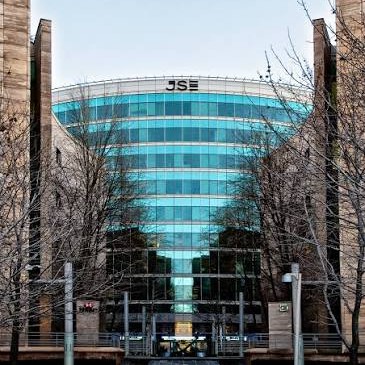
The issue has returned to the centre of public debate following repeated claims by political leaders, economists and business commentators that net Black ownership of companies listed on the Johannesburg Stock Exchange (JSE) is around 6%, after accounting for debt and other ownership structures. Although different studies have produced different figures depending on how ownership is measured, the debate highlights a broader concern whether Black South Africans are participating meaningfully in the ownership of the country’s productive economy.
Regardless of the precise percentage, few dispute that wealth ownership remains highly concentrated and that economic inequality continues to reflect South Africa’s historical legacy.
Political Freedom Without Broad Economic Ownership
South Africa’s democratic transition delivered universal voting rights, constitutional protections and equal citizenship. However, economic ownership has transformed more slowly than political institutions.
Many Black South Africans have entered the middle class, established businesses and assumed leadership positions across both the public and private sectors. Yet ownership of major listed corporations, strategic industries and significant capital assets remains uneven.
This raises a difficult but important question: Can a country truly claim economic transformation if the majority of its people own only a small share of its productive wealth?
Why Ownership Matters
Ownership is more than possessing shares on paper.
Ownership influences who makes investment decisions, who accumulates long-term wealth, who benefits from dividends, who controls productive assets and who shapes the future direction of the economy.
An economy in which millions participate only as workers or consumers, while relatively few accumulate productive assets, risks perpetuating inequality across generations.
Expanding ownership is therefore viewed by many economists as one component of inclusive growth, alongside quality education, job creation, entrepreneurship and competitive markets.
Progress Since 1994
South Africa has not stood still.
Policies such as Broad-Based Black Economic Empowerment (B-BBEE), preferential procurement, enterprise development, employment equity and sector transformation have enabled thousands of Black entrepreneurs and professionals to enter sectors that were historically closed to them.
Large Black-owned companies now operate in finance, telecommunications, mining, construction, retail, media, agriculture and technology.
However, critics argue that transformation has often benefited a relatively small number of individuals while broad-based ownership among ordinary South Africans has expanded more slowly than originally envisioned.
Supporters of existing policies respond that transformation is a long-term process requiring sustained investment, education, skills development and economic growth.
The Challenge Facing Black Entrepreneurs
Many Black-owned businesses continue to face structural obstacles that extend beyond legislation.
Limited access to finance, unequal access to markets, inadequate infrastructure, high borrowing costs, delayed payments, skills shortages and intense competition from established firms remain significant barriers.
Small and medium enterprises frequently struggle to grow into nationally competitive companies capable of listing on the JSE and attracting institutional investment.
Without addressing these barriers, ownership transformation alone may not produce sustainable economic inclusion.
Building a More Inclusive Economy
Increasing Black ownership should not be viewed simply as transferring existing wealth from one group to another.
The larger challenge is expanding the economy itself.
Industrialisation, manufacturing, agriculture, digital technology, renewable energy, creative industries and township economies all represent opportunities to create new wealth rather than merely redistribute existing assets.
Government has a role in creating a predictable policy environment, investing in infrastructure, improving education and strengthening institutions.
The private sector has a responsibility to invest, develop suppliers, expand enterprise development and support innovation.
Financial institutions can broaden access to capital for entrepreneurs with viable business ideas.
Educational institutions must equip young people with the technical, financial and entrepreneurial skills needed to build globally competitive businesses.
Broad-Based Ownership Must Benefit Communities
Transformation should also extend beyond elite transactions.
Employee share ownership plans, worker cooperatives, community investment trusts, pension fund participation, youth investment vehicles and public share schemes can allow millions of South Africans to participate directly in wealth creation.
Broad-based ownership strengthens both economic inclusion and social stability by ensuring that growth benefits society more widely.
Looking Beyond the Numbers
Whether the true figure is 6%, higher or lower depending on the methodology used, the broader question remains unchanged.
South Africa continues to face one of the highest levels of wealth inequality in the world. Closing that gap requires more than legislation it requires sustained economic growth, policy certainty, investment, innovation, entrepreneurship, skills development and accountable governance.
Economic transformation should ultimately be measured not only by who occupies executive offices but also by who owns productive assets, who builds successful businesses, who creates employment and who shares in the country’s prosperity.
The debate over Black ownership on the Johannesburg Stock Exchange is not merely about percentages. It is about the character of South Africa’s democracy and whether economic opportunity is becoming genuinely inclusive.
As South Africa seeks to build a more competitive and equitable economy, the challenge is to expand ownership without undermining investment, while creating conditions in which entrepreneurs from every community can thrive.
A truly transformed economy will be one in which ownership, opportunity and prosperity are broadly shared not as a matter of symbolism, but as the foundation for sustainable national development.
About the Author