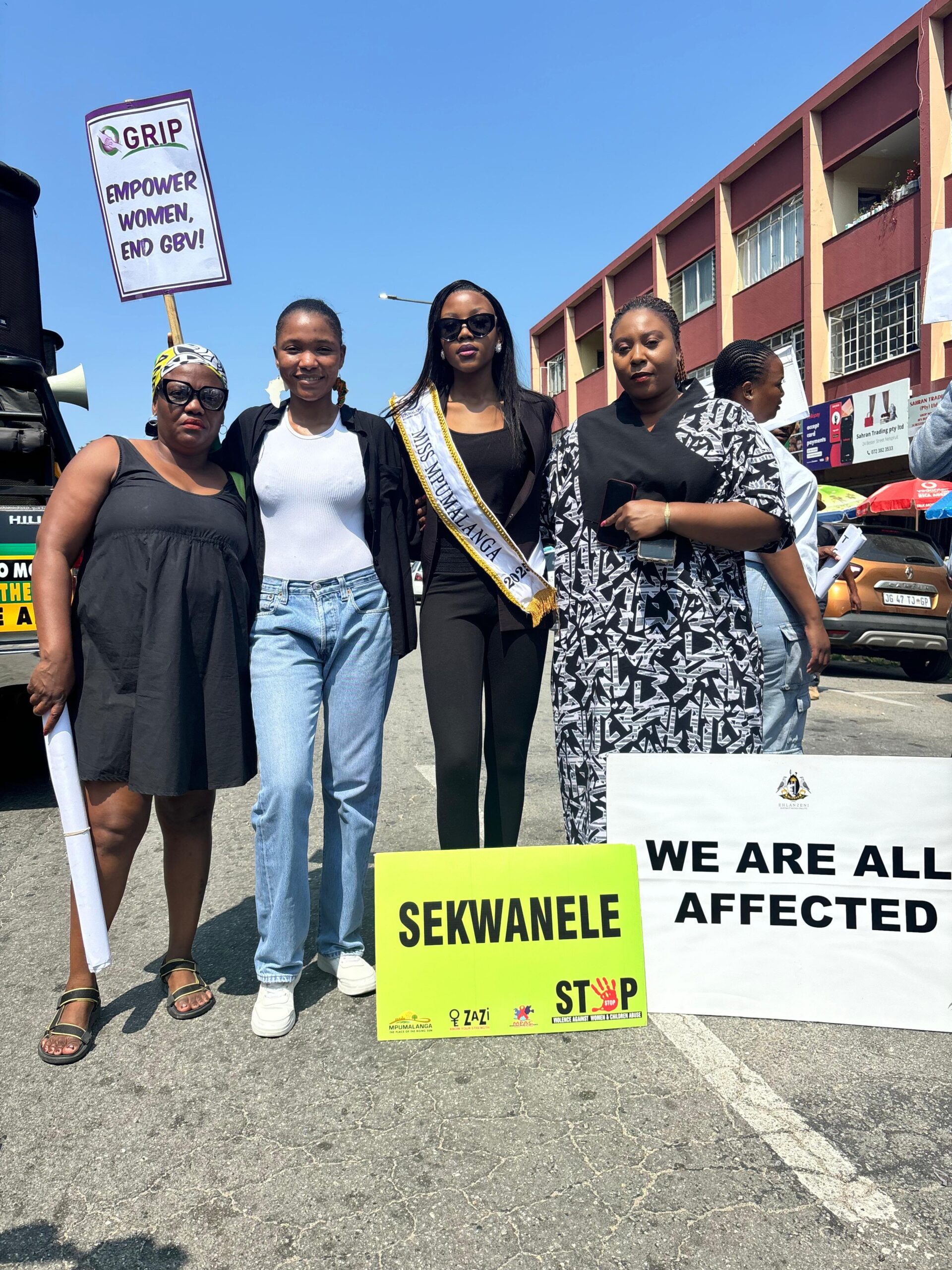
image supplied: women stand against GBV in
Emotions ran high at the Mpumalanga Regional Court as community members, school representatives, and provincial advocates gathered in a powerful show of solidarity for Lusanda Mathabela, a learner at the center of a gender-based violence (GBV) case that has drawn widespread attention.
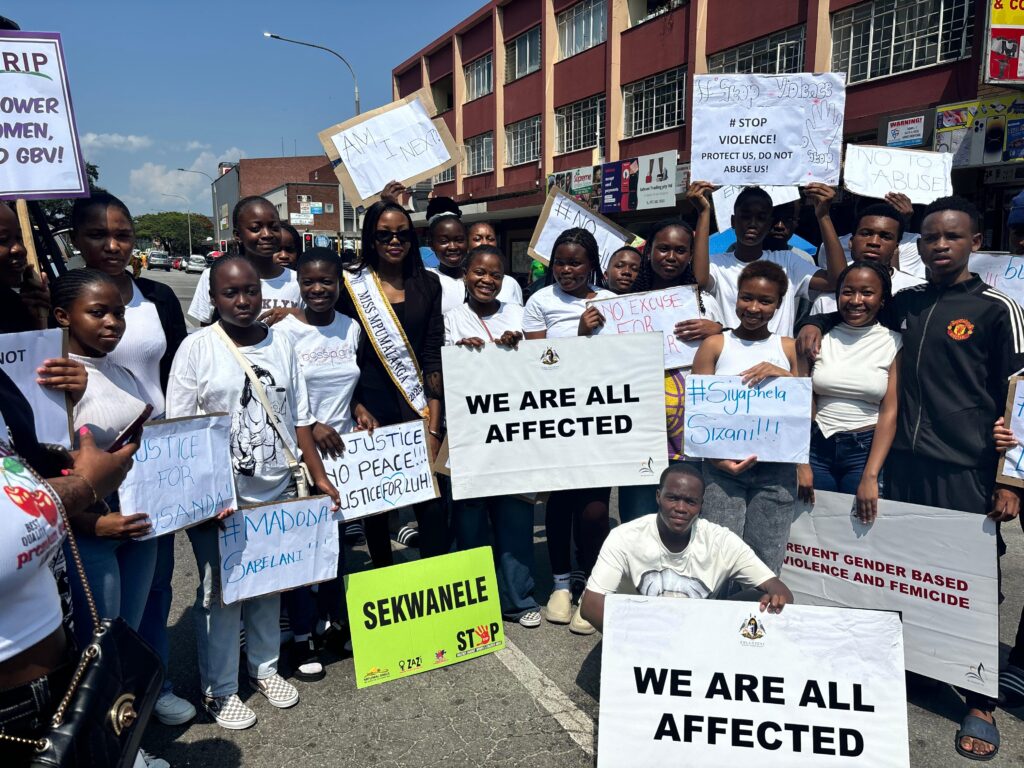
What began as yet another difficult court appearance for the young survivor transformed into a public demonstration of support, healing, and collective strength. The scene outside the courthouse was striking: students, teachers, and activists dressed in purple a color symbolizing dignity, courage, and the fight against GBV stood side by side, united in purpose.
Leading the group was Ms. Lethu Mathebula, who taught Lusanda during her final year of school. “We are here not just for Lusanda,” she said. “We are standing for every girl who has been silenced by fear. Today, we choose to speak, to stand, and to demand safer schools and communities.”
The show of solidarity was coordinated in partnership with The Mordecai Ndlovu Foundation, a prominent organization advocating for GBV awareness and youth empowerment across Mpumalanga. The Foundation’s GBV Programme Coordinator, Gugu Tshuma, emphasized the pressing need for proactive GBV prevention. “Responding after violence is not enough,” Tshuma said. “We need to teach empathy, respect, and boundaries in our schools. We are calling for the rollout of GBV Sensitization Workshops across the province, in partnership with the Department of Education and relevant commissions.”
Adding her voice to the movement was Miss Mpumalanga 2025, Ms. Linda Nkosi, who urged young women to reject silence and fear. “Silence is not consent,” she said. “We must raise our voices for Lusanda and for every survivor dreaming of a future free from violence.”
The atmosphere at the courthouse reflected both pain and hope. While the scars of GBV remain deep, the overwhelming support demonstrated today reminded many that healing is possible when communities come together. Teachers, learners, and local organizations formed a circle of compassion around Lusanda, symbolizing not only solidarity but also a shared commitment to justice.
The Mordecai Ndlovu Foundation reaffirmed its pledge to continue offering psychosocial support to survivors and to work closely with schools, civil-society groups, and human-rights bodies to build safer learning environments throughout Mpumalanga.
As the sun set over the courthouse steps, Lusanda stood surrounded by people determined to uphold her dignity and fight for justice a powerful reminder that no survivor should ever stand alone.
About the Author