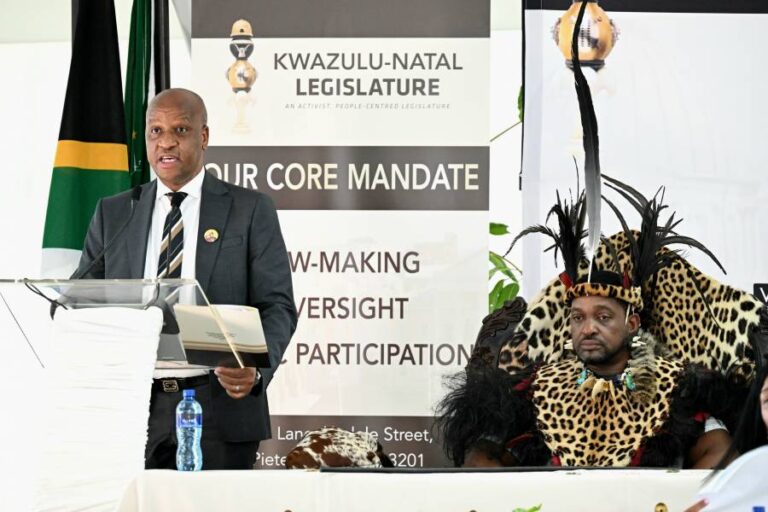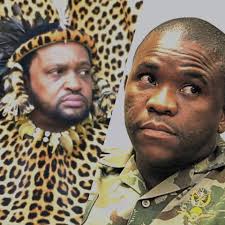
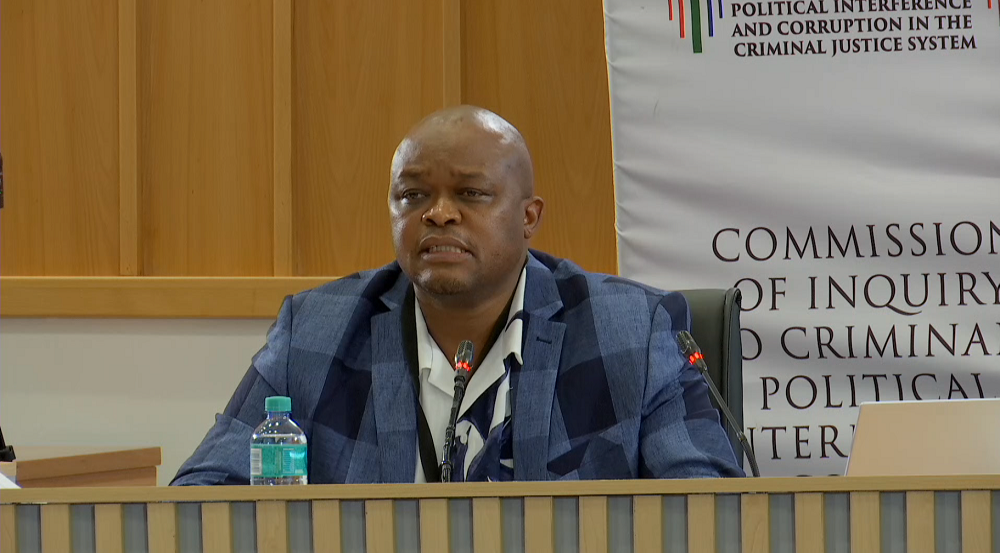
Oupa Mogotsi alleged the KwaZulu-Natal Police Commissioner and AmaZulu King collaborated with the CIA, raising serious questions about intelligence credibility, motives, and the need for substantiated evidence in the Madlanga Commission.
A dramatic turn in the Madlanga Commission hearings on Tuesday saw North West businessman and self-described police “contact agent” Oupa Brown Mogotsi make startling and unverified allegations that KwaZulu-Natal Police Commissioner Lieutenant-General Nhlanhla Mkhwanazi and AmaZulu King Misuzulu kaZwelithini were “recruited by and actively worked with” the United States Central Intelligence Agency (CIA). Mogotsi’s evidence, delivered in Phase Two of the Judicial Commission of Inquiry into criminality, political interference and corruption in the criminal justice system (the Madlanga Commission), immediately raised questions about sourcing, motive and the line between intelligence legend-building and admissible evidence.
Mogotsi told the commission he had served as a “contact agent” for Crime Intelligence and that his work gave him access to sensitive information. He said a source had told him, in December 2023, that the CIA had “tasked” Mkhwanazi to neutralise opposition to King Misuzulu a claim Mogotsi linked to Mkhwanazi’s US training and the king’s years abroad. He also said his enquiries had included a trip to Nairobi after being given a Kenyan contact’s details, which he said was connected to investigations into alleged foreign intelligence activity.
Mogotsi expanded on other sensational claims during his testimony including allegations that the alleged “Big Five” organised-crime cartel and state actors had interlocked and that millions were paid to senior officials. He acknowledged at the commission that some material he produced amounted to hearsay and that part of his modus operandi as an intelligence contact was “legend-building” (crafting cover stories to win access to suspects).
Justice Mbuyiseli Madlanga chairing the inquiry intervened repeatedly during Mogotsi’s account. At one point the commissioner bluntly characterised some of the CIA allegations as hearsay “upon hearsay” and pressed Mogotsi on whether he accepted that description. Mogotsi conceded that parts of his account were second-hand. Meanwhile, the commission has already heard earlier evidence notably WhatsApp chats and financial trails that connect alleged cartel figure Vusimuzi “Cat” Matlala with senior police and others; those earlier exhibits are the factual backdrop against which Mogotsi’s claims were heard.
Two critical points for assessing Mogotsi’s claims:
- Mogotsi repeatedly described elements of his testimony as coming from unnamed sources or intelligence leads. He admitted some details were rumours when first presented to him. The commission’s role is precisely to test such claims and separate verified evidence from gossip; Madlanga’s scepticism in real time underlined that rule.
- Senior police witnesses and other material already before the commission have described Mogotsi in far less flattering terms as a middleman or conduit who sought funds from suspects and who used contact-agent cover in ways that blur the line between intelligence work and criminal facilitation. Those prior accounts raise immediate evidentiary and credibility questions about whether Mogotsi’s statements reflect genuine intelligence leads or are self-protective narratives.
Accusing a sitting provincial police commissioner and a traditional monarch of being agents of a foreign intelligence service is seismic. If true, such links would have enormous implications for national security, the integrity of investigations into politically motivated killings, the independence of law-enforcement, and royal legitimacy in KwaZulu-Natal. But the seriousness of the charge is also why the commission by design demands documentary proof, corroborating testimony, communications records, or other hard evidence before such claims can be accepted or acted upon. The Madlanga Commission, established by President Cyril Ramaphosa to probe political interference and criminal infiltration of the criminal-justice system, has wide powers to subpoena and test such evidence.
Possible motives and explanations
Analysts and legal observers watching the hearings are mapping several possible explanations for Mogotsi’s testimony:
- Genuine intelligence lead: Mogotsi may be repeating information he believes is credible and that deserves formal investigation. The commission is the right forum to seek corroboration.
- Legend-building and cover: Mogotsi himself said he used “legend-building” as an intelligence technique. That practice can create plausible but ultimately false narratives if not carefully supervised and recorded.
- Self-defensive narrative: Given that earlier evidence presented to the commission connected Mogotsi to soliciting funds from suspects, explosive counter-allegations could be defensive an attempt to refract attention back onto others. The commission’s later phases (where implicated persons reply and earlier witnesses are re-called) are designed to unpick motive.
The Madlanga Commission proceeds in phases. Phase Two under way now allows persons implicated by earlier testimony to give their accounts. Phase Three will reopen and test evidence presented earlier, including by calling back witnesses such as Lt-Gen Mkhwanazi to respond to counter-allegations. Practically, to move beyond headline-grabbing claims the commission will need:
- documentary records (travel logs, communications, payments) linking the accused officials to foreign intelligence networks;
- corroboration from independent witnesses or agencies; and
- forensic follow-up by agencies with jurisdiction over intelligence matters (while protecting properly classified material and national-security concerns).
Even unproven, such claims have immediate political and social effects: they deepen mistrust in institutions already shaken by allegations of collusion between senior police and criminal networks; they place the presidency under pressure to show decisive leadership in pursuit of truth; and they risk inflaming factional or royal tensions in KwaZulu-Natal. For those reasons the commission’s methodical, evidentiary approach and careful public communication of what has and has not been verified will be crucial to limit further damage. Brown Mogotsi’s testimony injected a dramatic new narrative into the Madlanga Commission one that ties foreign-intelligence allegations to already explosive claims about police corruption and organised crime. But at this stage the CIA allegation should be treated as an assertion supported primarily by unnamed sources and the testimony of a witness whose credibility the commission must test. The Madlanga hearings exist precisely to do that testing: to separate corroborated fact from rumour, to call witnesses back for cross-examination, and to produce a record on which prosecutions, reforms or exonerations can be based. Until the commission furnishes corroborating evidence, the extraordinary claim that a provincial police commissioner and a monarch were CIA assets remains an allegation one with serious implications that only rigorous fact-finding can resolve.
About the Author