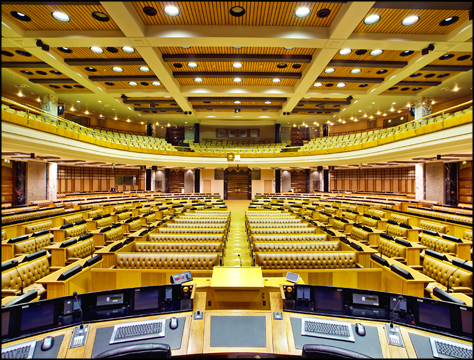
The South African Parliament is the national legislative authority of South Africa, responsible for making laws, overseeing the executive branch, and facilitating public participation in governance. It is a cornerstone of South Africa’s democracy, guided by the principles outlined in the Constitution of the Republic of South Africa, 1996.
Structure of Parliament
Parliament consists of two houses, functioning under a bicameral system:
- National Assembly (NA):
- Role: The primary legislative body responsible for debating and passing laws, representing the people, and scrutinizing the actions of the Executive.
- Composition:
- Members are elected through a proportional representation system during national elections.
- The number of members ranges between 350 and 400, based on the electoral results.
- Leadership:
- Speaker: Presides over the National Assembly and ensures order.
- Deputy Speaker: Assists the Speaker.
- Functions:
- Pass, amend, or repeal laws.
- Approve the national budget.
- Elect the President of South Africa.
- Hold the Executive accountable through questions and debates.
- National Council of Provinces (NCOP):
- Role: Represents the provinces and ensures their interests are considered in the national legislative process.
- Composition:
- Composed of 90 delegates (10 from each of South Africa’s nine provinces).
- Delegates include permanent members and special delegates appointed by provincial legislatures.
- Leadership:
- Chairperson: Presides over NCOP sessions.
- Deputy Chairperson: Assists the Chairperson.
- Functions:
- Review and vote on bills affecting provinces.
- Facilitate cooperation between the national and provincial governments.
- Provide a platform for provincial issues in national governance.
Legislative Process
- Introduction of Bills: Proposed legislation (bills) can be introduced by the Executive, individual members of Parliament, or committees.
- Debate and Amendments: Bills are debated and, if necessary, amended in the National Assembly and the NCOP.
- Approval: Once approved by both houses, the bill is sent to the President for assent.
- Presidential Assent: The President signs the bill into law, making it an official Act of Parliament.
Functions of Parliament
- Law-making: Developing and enacting legislation to address the country’s needs.
- Oversight: Monitoring the actions of the Executive to ensure accountability and transparency.
- Representation: Reflecting the will and needs of South Africans across diverse constituencies.
- Public Participation: Facilitating engagement between citizens and lawmakers through consultations, petitions, and hearings.
- Budgetary Oversight: Approving and monitoring the allocation and use of public funds.
Public Involvement in Parliament
South Africa’s Constitution emphasizes public participation in legislative processes. Mechanisms for public involvement include:
- Public Hearings: Forums for citizens to express views on proposed laws.
- Petitions: Formal requests submitted to Parliament for consideration.
- Participation in Committees: Opportunities for citizens and organizations to present evidence and opinions on policy issues.
Parliament’s Location
The South African Parliament is based in Cape Town, Western Cape, at the historic Parliamentary Precinct. This location has housed the country’s legislative authority since its colonial and apartheid-era assemblies.
Significance
- Serves as the voice of the people, ensuring democracy and the rule of law.
- Promotes cooperation among national, provincial, and local governments.
- Plays a crucial role in shaping South Africa’s legislative and policy framework.
About the Author