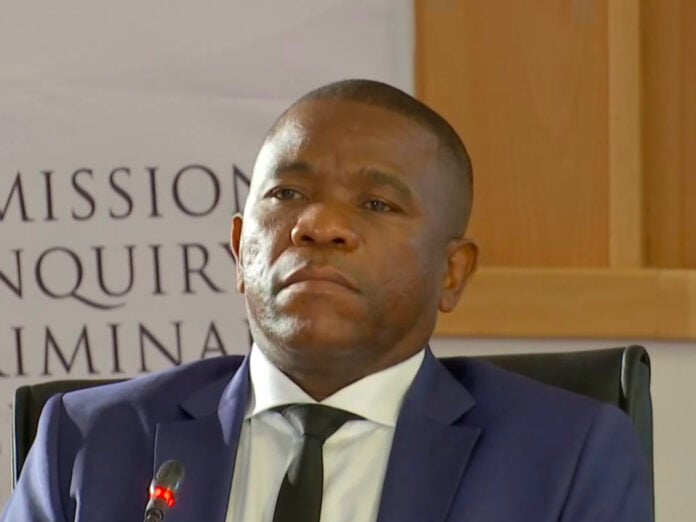
First, to understand the stakes, it helps to restate clearly what the Madlanga Commission of Inquiry was tasked to do.
- The Commission, chaired by retired Constitutional Court Justice Mbuyiseli Madlanga, is formally called the Judicial Commission of Inquiry into Criminality, Political Interference and Corruption in the Criminal Justice System.
- Its terms of reference include investigating whether senior members of the police, the executive (including ministers), the judiciary, prosecuting authorities, intelligence services and related institutions are involved with criminal syndicates, how institutional capture might have occurred, and whether investigations have been hindered by political interference.
- The Commission is to produce an interim report within three months, and a final report by six months (though Madlanga has said the six-month period might be extended if necessary).
- Hearings are to be public, but sensitive information may be heard in camera when warranted. Witness protection provisions also to be put in place.
So, the Commission is expected not simply to collect allegations, but to test them rigorously, to identify names, institutions, documents, timelines, and to assess responses from those implicated. It aims to shed light on whether South Africa’s criminal justice system is being undermined from within, and whether the rule of law and constitutional democracy are at risk.
Three Days of Testimony: What Mkhwanazi Claimed
Over three days, Lt-Gen. Mkhwanazi laid out a series of detailed, explosive allegations, naming people and institutions, describing what he sees as patterns of interference, obstruction, and negligence. Key themes emerged each day; below is a summary of what he said, how he said it, what is credible or already known, and where there remain gaps or risks.
Day 1: The risk of collapse, origins of the task team, and public disclosure
- Warning of collapse: Mkhwanazi began with a solemn warning: the criminal justice system is not merely under pressure but is facing the risk of “total collapse” unless urgent reform is undertaken.
- Political interference and corruption: He emphasised that his July media briefing (6 July 2025) was not self-initiated in isolation, but reflected concerns shared across ranks in the South African Police Service (SAPS), about criminality, corruption, and political meddling in sensitive investigations.
- The Political Killings Task Team (PKTT): He traced its origin, particularly in KwaZulu-Natal, as a response to rising political violence. He alleged that Politician Senzo Mchunu (then Police Minister) ordered the disbandment of the PKTT without properly engaging or briefing those who ran it and without appreciating its importance. He suggested that the decision was motived by interests outside of SAPS, or undue political influence.
Thus, Day 1 set the foundation: claim of serious threats to public safety and rule of law; naming of institutional mechanisms (PKTT) as a point of collision between law enforcement and political power; a justification for public disclosure.
Day 2: Naming names, crime intelligence, ignored warnings, oversight gaps
- MPs and political actors implicated: Mkhwanazi directly implicated two members of Parliament (MPs), DA’s Dianne Kohler Barnard and NCC leader Fadiel Adams, in interfering with Crime Intelligence operations. He said Barnard had “violated legal protocols and incited attacks” on Crime Intelligence, while Adams had gained access to classified intelligence info without authorisation.
- Ignored evidence and past commissions: He said he had submitted an affidavit to the Zondo Commission (2011) when he was acting National Commissioner, laying out similar or related patterns of interference, yet those concerns were ignored. This suggests the problems are not new; there is possibly institutional inertia or deliberate suppression.
- Oversight weaknesses: Mkhwanazi criticised the oversight of intelligence functions, the lack of follow-up on dockets requiring action, and how some prosecutions and bail processes were mishandled ransom, so to speak, of procedural norms.
Thus, Day 2 deepened the allegations: went beyond broad claims to naming individuals; laid claim to internal memory (past warnings) being ignored; exposed structural voids in oversight and responsiveness.
Day 3: Syndicates, cartel networks, alleged shielding, executive interference
- Connections to criminal syndicates: Mkhwanazi alleges links between senior political actors, including Senzo Mchunu, and businessmen alleged to be involved in syndicate or cartel activity. For example, Brown Mogosi is named as someone with “deep connectivity” within the SAPS despite not being part of it, allegedly close to Mchunu.
- Interference with operational units: He claimed there was a deliberate weakening of units that were targeting organized crime the Gauteng Crime Intelligence operations being disrupted, for instance; instructions for arrests in PKTT dockets being ignored; bail granted to dangerous suspects despite risk; forensic evidence being omitted or compromised.
- Attempts to protect individuals and institutions: He alleges that political actors have used their influence to quash or redirect investigations, favour certain persons (or cartel-connected actors), and interfere with judicial or prosecutorial decisions (bail, arrest, evidence gathering). He also suggests that repeated requests or queries internally were overridden or ignored.
Day 3 thus painted a picture of systematic capture: not just individual wrongdoing, but embedded networks of influence crossing policing, prosecution, intelligence, and political leadership.
Analysis: Strengths, Risks, Unanswered Questions
Mkhwanazi’s testimony has been powerful, but as with any high-stakes inquiry, there are both strengths and vulnerabilities to the case as it is being built.
Strength
- Specificity: Mkhwanazi does more than allege abstract corruption; he names specific people (MPs, ministers), specific units (Task Team, Crime Intelligence in Gauteng, etc.), specific incidents (dockets with arrest instructions but no action). This gives the Commission something concrete to test.
- Continuity over time: The fact that he asserts similar patterns over many years (e.g. his 2011 affidavit to the Zondo Commission) suggests this is not merely a present-day crisis but a longstanding structural problem. That adds weight to claims of systemic capture rather than isolated rogues.
- Public disclosures acted as trigger: His public briefing in July appears to have forced the hand of presidency to set up the Commission. That supports the claim that internal channels were insufficient. It also gives his testimony greater legitimacy in the public eye.
- Multiple implicated areas: The allegations cut across institutions (SAPS, NPA, intelligence services, prosecutorial and judicial actors) and processes (bail, arrests, assignment, oversight, internal referrals) – which means that remedies will need to be equally broad.
Risks, Gaps, and Things Needing Corroboration
- Verification of evidence: While Mkhwanazi has made many claims, the Commission must verify them via documents, communications, internal reports, forensic evidence. Some of these may be classified or difficult to produce; some may be contested.
- Biased perspective, potential for omission: As with any testimony from a participant, there may be events or individuals that are under-emphasised or missing. Also, Mkhwanazi’s position lends him access but also potentially bias. It will be critical for the Commission to test counterclaims and rebuttals.
- Legal constraints, witness protection, and procedural fairness: Some names and evidence may require in-camera sessions; there may be resistance or obstruction from those named; some accused may decline to appear. Ensuring due process will be essential to avoid legal challenges to findings.
- Political pushback: The allegations implicate current or recently active politicians. Those individuals will inevitably seek to defend themselves, possibly via legal, political, or media channels. The Commission’s findings may be contested or delayed.
- Timing, scope, and resources: Given that the Commission is only formally mandated to six months, with an interim report at three, there is risk that depth is sacrificed for speed; that some investigations (especially historical) are too complex to complete in time; that resources (investigators, staff, document retrieval) may be stretched.
What Has Emerged So Far vs What Still Needs to Be Proven
| Emerging Claims | What Needs Corroboration/Evidence |
| PKTT was disbanded under political pressure, with inadequate process. | Internal memos, ministerial directives, evidence of briefing, whether legal requirements were met. |
| MPs intervened in crime intelligence functions; classified info was mishandled. | Email/WhatsApp/official communication records, logs of accesses, oversight committee minutes, testimony from MPs themselves. |
| Arrest instructions in certain dockets were ignored; bail granted despite risk; evidence compromised. | Forensic reports, court records, docket tracking, possibly witnesses or forensic analysts. |
| Contact or relationship between political actors and criminal syndicates (e.g. Brown Mogosi). | Financial records, communication trails, overlap in persons, credible witnesses, possible criminal case files. |
Implications: What This Could Mean
The gravity of the allegations, if substantiated, reaches deeply into the integrity of the criminal justice system. Potential implications include:
- Erosion of public trust: Already, many South Africans likely see law enforcement and justice institutions as underperforming; claims of internal sabotage or political capture will worsen that perception unless addressed transparently.
- Need for institutional reform: Beyond disciplinary outcomes for individuals, this may demand structural reforms in how intelligence operations are overseen, how police and prosecutorial decisions are insulated (or protected) from political influence, how whistleblowers or internal complaints are handled.
- Legal and accountability consequences: If criminal liability is uncovered, prosecutions may follow; ministers or senior officials could be held accountable; bail and other court decisions might come under scrutiny for past failures.
- Policy reforms: Legislation or regulations may need to be tightened: oversight of ministers, greater transparency in task teams, better protections for intelligence secrecy, more rigorous bail and arrest monitoring.
- Political fallout: For those named especially high-profile figures like ministers or MPs there may be reputational, political, or legal damage. This could lead to resignations, disciplinary action, or investigations within Parliament or within party structures.
Conclusion: Turning Allegation into Accountability
Lieutenant-General Mkhwanazi’s three days of testimony have raised serious red flags about the health of South Africa’s criminal justice institutions. The Madlanga Commission is now in a position to test these claims to examine documents, cross-examine witnesses, invite responses from the accused, and to assess whether what is alleged matches what is provable.
The key for the Commission will be to maintain fairness and rigor while moving swiftly enough that the initial momentum is not lost. Its interim report (due in three months) may give a strong indication of how the rest of the work will be framed. For the public, transparency, clarity, and follow-through will be essential if this inquiry is to restore confidence in policing, justice, and governance.
About the Author