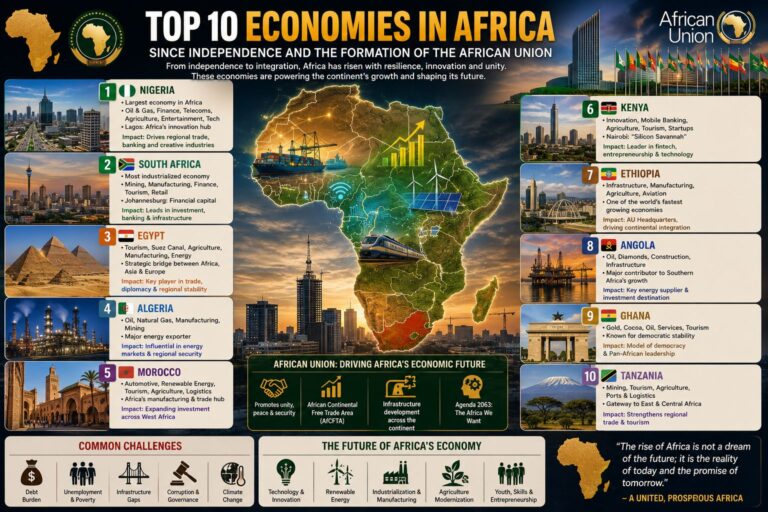
The South African economy is a mixed-market economy, characterized by a combination of private enterprise, government involvement, and a mix of developed and developing economic sectors. It is the most industrialized, technologically advanced, and diversified economy on the African continent, with significant contributions from various industries and sectors. Here is an overview:
1. Key Characteristics
- Mixed Economy: Combines elements of both free market and state intervention, with some industries (like energy and transport) under government control.
- Diverse Sectors: Includes agriculture, mining, manufacturing, finance, trade, and tourism, among others.
- Dual Economy: Features a modern, industrialized economy alongside significant informal and rural economies.
2. Major Sectors
- Mining: South Africa is one of the world’s largest producers of precious metals like gold, platinum, and diamonds, as well as minerals like coal and manganese.
- Manufacturing: Encompasses automobile production, machinery, chemicals, and food processing industries.
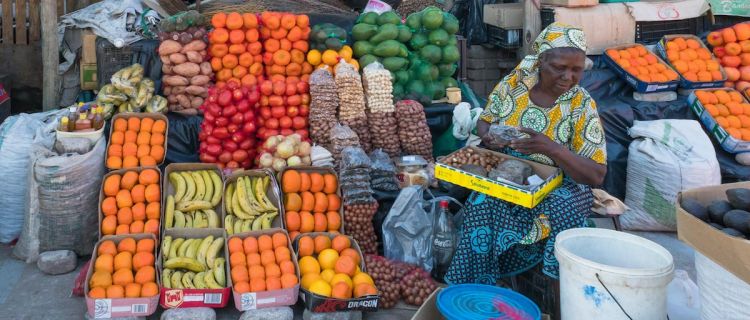
- Agriculture: Known for products like maize, sugar, wine, and citrus fruits. The sector is vital for both domestic consumption and export.
- Finance and Banking: A well-developed financial sector, with Johannesburg being a financial hub and home to the Johannesburg Stock Exchange (JSE), the largest in Africa.
- Tourism: A significant contributor, driven by the country’s rich natural heritage, wildlife, and cultural diversity.
- Services: Includes retail, logistics, and communication sectors.
3. Economic Challenges
- Unemployment: Persistent high unemployment, particularly among youth, remains a pressing issue.
- Inequality: The legacy of apartheid has left South Africa with stark economic disparities along racial and geographical lines.
- Energy Crisis: Frequent power outages (load-shedding) caused by challenges at Eskom, the state electricity provider, hinder economic growth.
- Corruption: Allegations and instances of corruption in both public and private sectors impact investor confidence.
- Infrastructure Deficit: A need for significant investment in infrastructure to support economic growth.
4. Key Economic Indicators (Recent Trends)
- GDP: South Africa is the second-largest economy in Africa (after Nigeria), with a GDP primarily driven by services and industry.
- Trade: The country is a major exporter of minerals, metals, and agricultural products, with key trade partners including China, the European Union, and the United States.
- Currency: The South African Rand (ZAR) is subject to fluctuations influenced by domestic and global factors.
- Inflation: Generally managed within a target range by the South African Reserve Bank (SARB).
5. Transformation Efforts
- Broad-Based Black Economic Empowerment (B-BBEE): Policies to redress inequalities and promote economic participation of historically disadvantaged groups.
- Land Reform: Aimed at redistributing land to address historical dispossession.
- Industrial Policies: Focused on stimulating manufacturing and diversifying exports.
- Digital Economy: Investments in technology and innovation to modernize the economy and create jobs.
6. International Standing
South Africa is a member of global and regional economic organizations, including:
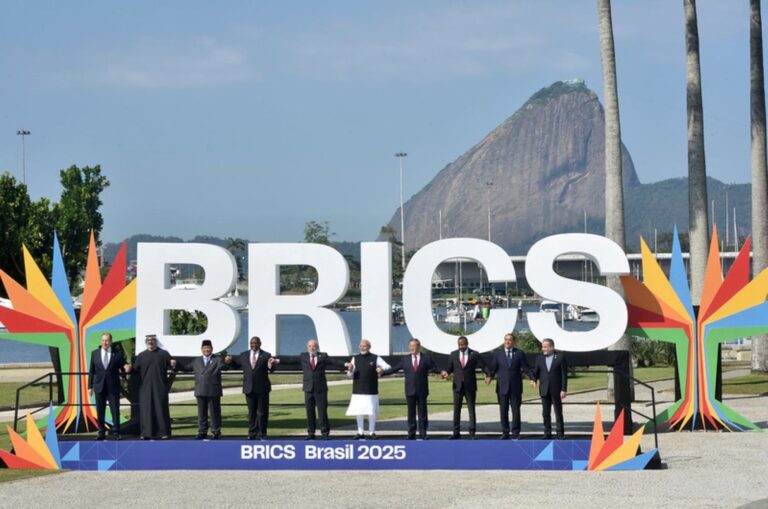
- BRICS (Brazil, Russia, India, China, South Africa)
- African Union (AU)
- Southern African Development Community (SADC)
- G20
These affiliations enable the country to influence and participate in shaping global economic policies while benefiting from regional cooperation.
About the Author