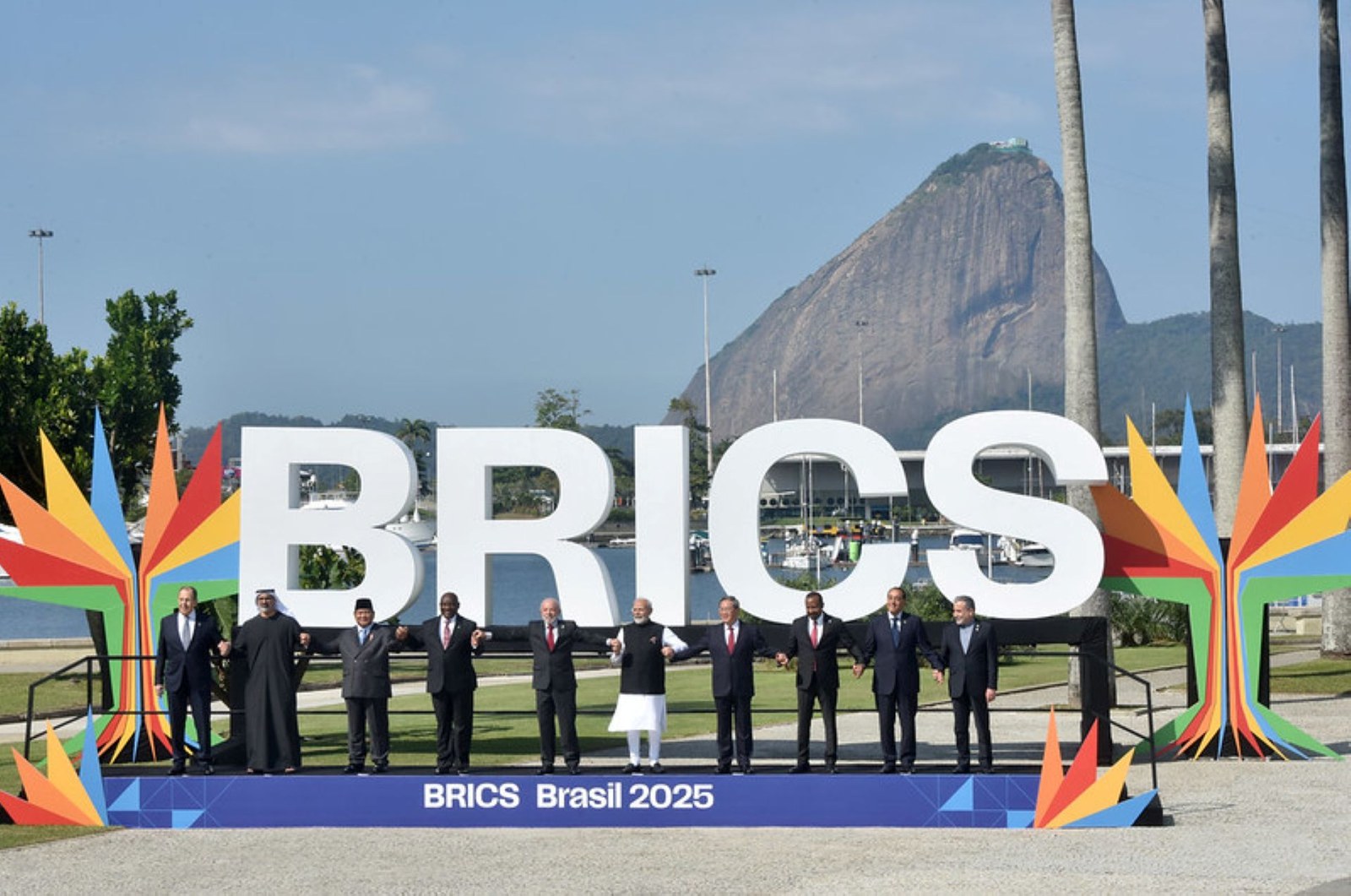
RIO DE JANEIRO – The 17th BRICS Summit concluded this weekend with bold calls for urgent reforms in global financial institutions and a unified framework for responsible artificial intelligence (AI) governance. The summit, hosted in Rio de Janeiro from July 6–7, gathered leaders from 11 member states under the theme “Global Governance for a Multipolar World.”
The high-stakes meeting marked a pivotal moment for the bloc, comprising Brazil, Russia, India, China, and South Africa, along with six newly admitted members: Egypt, Ethiopia, Indonesia, Iran, Saudi Arabia, and the United Arab Emirates. While some founding leaders, including China’s President Xi Jinping and Russia’s Vladimir Putin, participated virtually, the summit pushed forward an ambitious agenda focused on restructuring global power dynamics.
Unified Push for IMF Reform
A key outcome of the summit was the bloc’s unified proposal for reforming the International Monetary Fund (IMF). BRICS finance ministers presented a formal submission aimed at reshaping the IMF’s quota system and voting power allocations to reflect the growing economic clout of the Global South.
Currently, the United States holds a 16% voting share at the IMF enough to veto major policy changes. BRICS members argue that this outdated power structure no longer mirrors today’s global economy, where BRICS countries collectively account for nearly 40% of the world’s population and over 35% of global GDP.
“We can no longer accept institutions where power dynamics are frozen in a post-World War II framework,” said Brazilian Finance Minister Fernando Haddad. “Our proposal emphasizes fairness, transparency, and true multilateralism.”
The bloc also challenged the tradition of appointing only Europeans to lead the IMF, calling for a merit-based and geographically inclusive leadership process.
Landmark Declaration on AI Governance
For the first time in its history, BRICS issued a multilateral declaration on Artificial Intelligence governance, setting ethical benchmarks and pushing for equitable access to AI tools and infrastructure.
Indian Prime Minister Narendra Modi led the charge, calling on member states to work together on “responsible, transparent, and inclusive” AI development. He highlighted the need to secure access to critical minerals and data sovereignty especially for developing nations increasingly dependent on AI-driven systems.
The declaration emphasized:
- Sovereignty over national data
- Ethical AI development frameworks
- Shared research and innovation networks
- Safeguards against algorithmic bias and surveillance misuse
South African President Cyril Ramaphosa added that “Africa must not be left behind in the Fourth Industrial Revolution. Our data, languages, and knowledge systems deserve protection and integration.”
Rebalancing Global Power
As the BRICS bloc expands and aligns on issues like trade, tech, and governance, analysts say the group is increasingly positioning itself as a counterweight to the Western-led order. The Rio Summit’s declarations mark a clear intent to reshape institutions like the IMF, World Bank, and even global digital norms.
While critics argue that internal differences among BRICS members could limit its impact, supporters see the alliance as the most credible voice for the Global South.
The next BRICS Summit is set for Jakarta, Indonesia, in 2026, where further steps toward institutional reform and economic integration are expected.
About the Author