South Africa’s G20 presidency promotes African priorities like climate finance, debt sustainability, and inclusive growth while boosting economic investment and regional influence amid global challenges.
By Msizi Mavundla, Johannesburg
As the world’s eyes turn to Johannesburg later this year for the G20 Leaders’ Summit, the fact that South Africa holds the rotating presidency of the G20 from 1 December 2024 through 30 November 2025 marks a historic moment for the country and the continent.
What is at Stake, Summit Objectives & Expected Outcomes
Under the theme “Solidarity, Equality and Sustainable Development”, President Cyril Ramaphosa has spelled out a policy-agenda for the G20 presidency that emphasises Africa and the Global South.
Key objectives:
- Prioritising climate finance and ensuring developing countries gain access to affordable green-transition funds.
- A push for debt sustainability and improved sovereign credit-ratings mechanisms for lower-income states.
- Reforming global economic governance: making the likes of the International Monetary Fund, the World Trade Organization and rating-agencies more responsive and inclusive.
- Driving industrialisation in Africa via critical-minerals value chains, infrastructure investment, digital inclusion, AI/data governance and food-security.
- Ensuring that the Summit delivers tangible legacy benefits in infrastructure, youth and SME empowerment, tourism and investment for the host and region.
Expected outcomes:
- The Johannesburg summit will convene world leaders with an attempt to adopt a declaration committing countries to these priorities.
- Dozens of ministerial, working-group and task-force meetings are being held across South Africa during the presidency, embedding the G20 agenda locally.
- South Africa will demonstrate its readiness not just as a host but as a driver of developmental finance and infrastructure innovation across Africa.
Why This Presidency Matters for South Africa
For South Africa, this presidency is about more than diplomatic prestige, it is a strategic lever.
Economic Benefits and Investment Attraction:
Hosting the G20 agenda brings immediate economic boost to tourism, the hospitality sector, transport and business services in cities like Johannesburg, Cape Town and Durban. The increased investor visibility is highlighted as a channel to raise foreign direct investment, improve business confidence and highlight South Africa as an investment-gateway to Africa.
Policy and Institutional Legacy:
By steering task-forces on inclusive economic growth, artificial intelligence/data governance, and food security, South Africa is shaping global policy-setting. The pressure to reform multilateral institutions and global finance to reflect the Global South’s needs helps align international norms with national ambitions.
Africa-Centric Diplomacy:
As the first African country to hold the G20 presidency and with the African Union as a full member of the G20, South Africa is positioning itself as the continental voice in this premier economic forum. For South Africa, this amplifies its role in regional leadership as well as underlining the value of African unity in global governance.
How This Formation Compares: G20 vs BRICS and the Commonwealth of Nations
South Africa’s participation in multiple multilateral groupings gives it choice and strategic flexibility. Here’s how the G20 presidency stacks up against two other formations in which the country is involved:
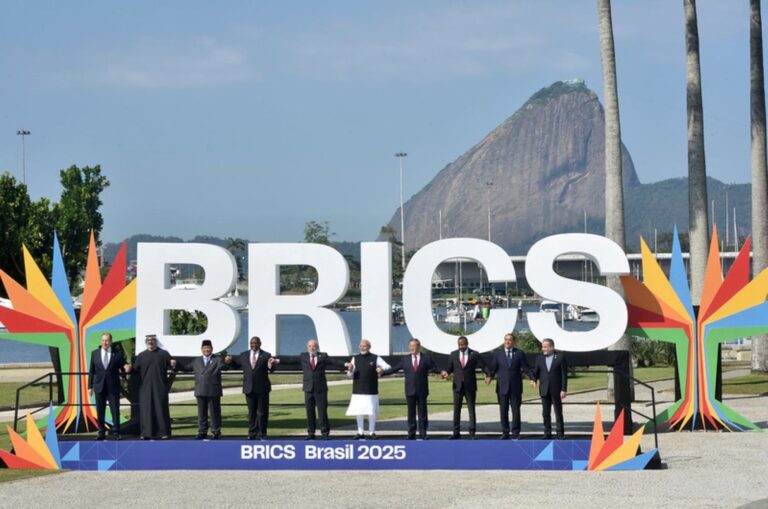
BRICS (Brazil, Russia, India, China, South Africa):
- The BRICS forum focuses principally on emerging-market cooperation, infrastructure finance (via the New Development Bank), South-South ties, and providing an alternative voice to the advanced-economies blocs.
- Benefits for South Africa from BRICS include access to development finance, strengthening trade with large emerging economies, and leveraging its African strategic position.
- Limitation: BRICS lacks the formal global governance and economic heft of the G20 (which brings together the world’s largest advanced and emerging economies). It is less institutionalised in terms of global financial architecture.
Commonwealth:
- The Commonwealth is a political-cultural network of 56 countries (mostly former British colonies) that facilitates cooperation in governance, human rights, education, trade and soft diplomacy.
- For South Africa, membership offers diplomatic networks, cultural-link benefits, and trade ties with a large number of countries, especially in sub-Saharan Africa, the Caribbean and Asia.
- Limitation: The Commonwealth is less focused on high-level macroeconomic coordination or global financial governance than the G20; its decision-making tends to be consensus-based with limited enforcement or binding commitments.
Why the G20 Presidency is Particularly Advantageous:
- The G20 is the premier global economic forum, with direct impact on major economies, financial institutions and global rules of the game. Hosting and presiding over it gives South Africa a seat at the highest table of economic diplomacy.
- It allows South Africa to shape agenda-setting (rather than simply participating) on issues of climate finance, debt relief, digital inclusion and global governance reform, areas highly relevant to Africa.
- It reinforces South Africa’s role as a hub for global investment into Africa, boosting its regional influence and economic positioning.
- The G20 presidency adds to South Africa’s soft-power and credibility as a developing-economy leader, enhancing its voice in other formations (like BRICS and the Commonwealth) by virtue of its expanded capability and profile.
Challenges & Considerations
While the opportunities are substantial, there are risks and obstacles:
- Global geopolitical tensions and divisions (for example between major powers) may limit consensus and reduce the effectiveness of the summit.
- There is a risk that the legacy benefits may not trickle down to ordinary South Africans, hosting high-level meetings is one thing; changing structural inequalities is another. Indeed, parliamentary oversight emphasises the need for tangible benefits to youth, SMEs, women and black-owned business.
- The capacity of South Africa and African countries to deliver on ambitious agenda items (such as just energy transitions, infrastructure financing, digital inclusion) will be tested.
- Expectations will be high: Africa will be watching for concrete progress, not just rhetoric.
For South Africa, the G20 presidency signals a defining moment: a chance to move from being a participant in global forums to being a host-leader and agenda-shaper. By leveraging BRICS and the Commonwealth in parallel, the country can reinforce its multi-vector diplomacy and deep ties across the Global South.
If the summit’s objectives are realized, greater climate finance flows, fairer debt mechanisms, digital inclusion, infrastructure investment, and industrialisation of African critical-minerals chains, then South Africa and its continent could secure a stronger foothold in the global economy. The challenge will be converting these words into action and ensuring that the outcomes benefit both the nation and its most vulnerable citizens.
About the Author