
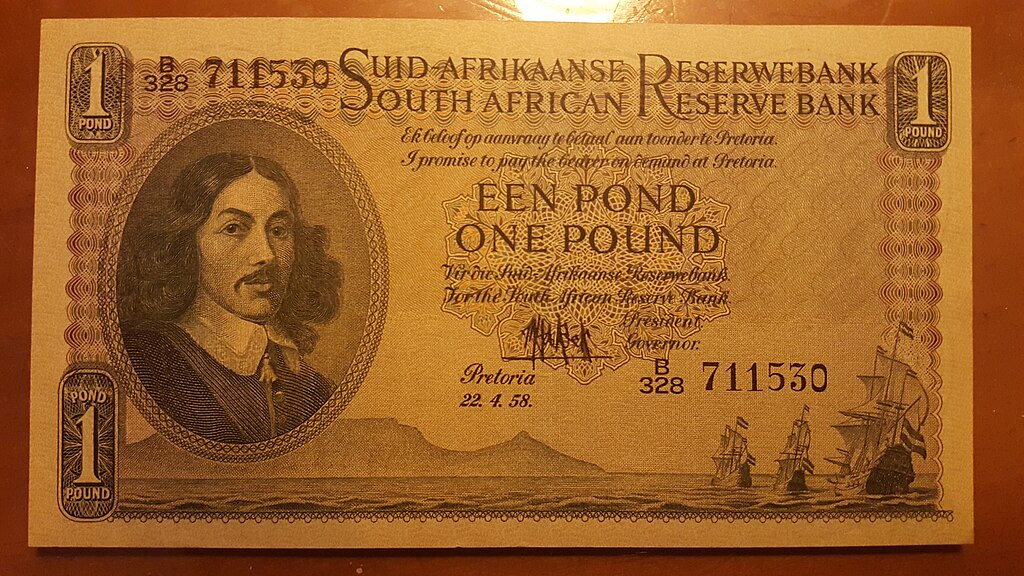
The South African Rand, introduced in 1961, reflects the nation’s political and economic history, declining during apartheid, recovering in the 2000s, and now facing modern challenges and potential digital transformation.
The South African Rand (ZAR) was introduced on February 14, 1961, replacing the South African pound, and symbolizes the country’s political history and economic journey. Named after the Witwatersrand area known for its gold, the Rand began strong, initially pegged to the US dollar, reflecting South Africa’s booming economy at the time. One Rand could buy more than one US dollar during its early years.
However, the 1980s marked a turning point for the Rand, as international sanctions related to the apartheid regime led to a sharp decline in its value. Political instability and economic issues resulted in a loss of more than half its value by the end of the decade. In the 1990s, political changes and the end of apartheid brought hope but also uncertainty, leading to continued depreciation of the Rand during major crises, including the Asian financial crisis.
In the 2000s, South Africa adopted a flexible exchange rate system, allowing the Rand to float freely, which increased volatility but improved transparency. A significant crisis occurred in 2001 when the Rand hit historic lows. Yet, following investigations and reforms, the currency began to recover.
The presidency of Jacob Zuma from 2009 to 2018 brought new challenges, with political scandals and corruption allegations causing significant declines in the Rand’s value. Notably, the “Nenegate” crisis in 2015, when Finance Minister Nhlanhla Nene was abruptly removed, highlighted the currency’s susceptibility to political decisions.
More recently, the Rand faced major challenges during the COVID-19 pandemic, reaching its weakest value in history at over R19 to the US dollar, though it rebounded later. Ongoing geopolitical tensions, global interest rate hikes, and South Africa’s infrastructure issues continue to pressure the currency.
The South African Reserve Bank is exploring digital currency frameworks, indicating a potential future for a Digital Rand. Regional economic integration in Southern Africa raises questions about the Rand’s role beyond South Africa, as it is already informally used in neighboring countries.
In 2012, the Mandela Series banknotes were introduced to honor Nelson Mandela, South Africa’s first democratically elected president, serving as symbols of unity and transformation. The design was updated in 2023 to enhance security and representation of South Africa’s wildlife.
Overall, the evolution of the South African Rand is a reflection of the nation’s history, encompassing its struggles and triumphs. It continues to be affected by political and economic factors at both local and global levels. As South Africa works through its challenges, the Rand remains significant as both a currency and a representation of resilience and identity.
About the Author