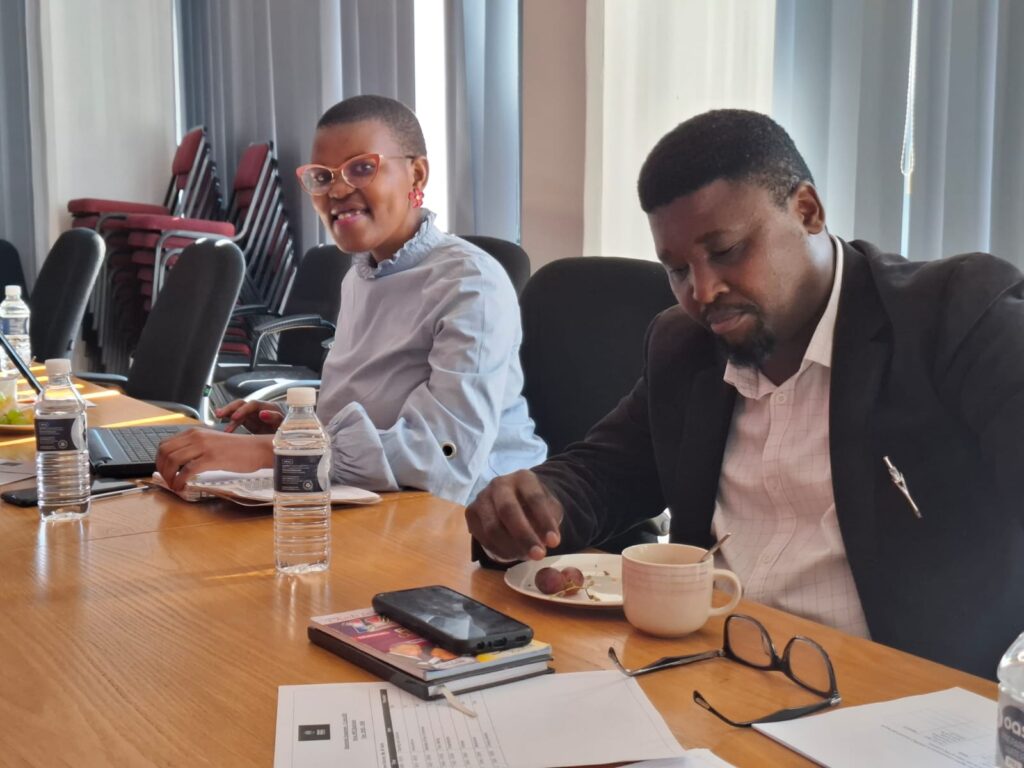
On June 12, 2025, the South African Human Rights Commission (SAHRC) hosted a pivotal stakeholder engagement at its Mbombela Office, addressing critical challenges facing children’s education in South Africa. The event focused on the intersection of human rights and education, drawing attention to systemic issues that hinder access, quality, and safety in the learning environment.
Key participants, including representatives from the Mordecai Ndlovu Foundation, gathered to explore pressing questions:
- What is the SAHRC’s mandate in tackling competency and corruption in the education sector?
- What monitoring tools are available for recruitment in education?
- And where does the SAHRC’s jurisdiction end when addressing these systemic challenges?
Section 28 and the Rights of the Child
One of the most thought-provoking contributions came from Dr. Tembisa Leeuw, who questioned the application of Section 28 of the South African Constitution—particularly its relevance when children’s rights are infringed before any direct impact on the learner is visible.
Section 28 enshrines children’s rights to:
- Basic education
- Protection from maltreatment
- Freedom from abuse and degradation
It serves as a constitutional foundation for evaluating the education system’s failures through a human rights lens.
Challenges in the Education System
Stakeholders outlined several persistent issues that infringe on children’s right to education, including:
- Drug abuse: A growing concern impacting learners’ health and performance
- Late coming: A behavioral issue affecting learning continuity
- Violence in schools: Creating unsafe learning environments
- Enrolment challenges: Restricting equitable access to education
- Competency and corruption: Undermining trust and educational standards
Mr. Erica Mokonyama, SAHRC Provincial Manager, emphasized that “some challenges are systematic and individual,” pointing to the layered complexity of educational inequality.
The SAHRC’s Mandate
The SAHRC is constitutionally mandated to promote, protect, and monitor human rights—including the right to education. It can:
- Investigate complaints of human rights violations
- Conduct inquiries into systemic issues
- Recommend policy changes or legal interventions
However, its powers stop short of enforcing administrative changes within the Department of Education, highlighting the need for interdepartmental cooperation.
Monitoring Recruitment in Education
Effective recruitment in the education sector is critical for upholding learners’ rights. Recommended tools include:
- Transparent recruitment processes: Ensuring fairness and meritocracy
- Background checks: Vetting candidates for suitability
- Performance evaluations: Regular assessments of teachers and administrators
These tools are essential to promoting a competent, accountable, and ethical education workforce.
Proposed Resolutions
As articulated by Nolwazi Shongwe, Public Relations Officer at the Mordecai Ndlovu Foundation, two key resolutions were proposed:
- Integrating AI into Curriculum Development
Exploring how Artificial Intelligence can support personalized learning, improve outcomes, and modernize education delivery. - Regulating Online Registration Processes
Mr. Ndlovu called for robust legal and policy frameworks to govern online registration, ensuring transparency, efficiency, and equity in learner placement.
Call to Action
Fareeda Mashab, Community Liaison Officer and Trauma Unit Supervisor at GRIP (GBV Intervention Program), stressed the importance of creating safe spaces for children to share their experiences.
Mr. Gololo, founder of the School Monitoring Foundation, emphasized the need for a systematic approach to combat social ills affecting education.
Department of Education’s Role
Stakeholders called on the Department of Education to develop a clear action plan to address these challenges. The consensus was clear: only through collaboration, accountability, and community involvement can a truly inclusive and rights-based education system be achieved.
Conclusion
The SAHRC’s engagement in Mbombela brought critical attention to the human rights dimensions of education. With committed partners such as the Mordecai Ndlovu Foundation, the event reaffirmed the urgency of protecting every child’s right to learn, thrive, and succeed. The future of education in South Africa depends not only on policy but on collective action grounded in the principles of justice, dignity, and human rights.
About the Author