
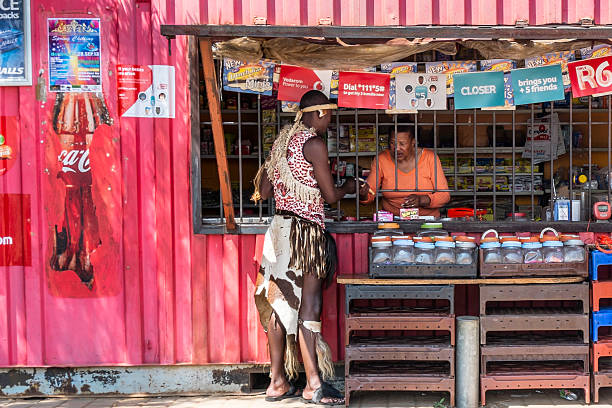
Johannesburg, South Africa - September, 24th 2013: African zulu man dressed in his traditional clothing, shopping at a spaza shop in Orlando, Soweto. Shop is made from an old shipping container with signs and posters seen stuck on. Burglar proofing for safety.
In South Africa’s townships and rural areas, spaza shops serve as crucial businesses that provide jobs and essential services. To support these informal shops, various stakeholders have created the Spaza Shop Fund, which aims to empower and formalize the spaza shop sector.
The Spaza Shop Fund offers financial help to micro-retailers in underserved areas through grants, low-interest loans, stock vouchers, business training, and digital tools. Managed by the Department of Small Business Development (DSBD) alongside organizations such as SEFA and local suppliers, the fund is designed for shop owners who typically lack access to traditional banking. Its goal is to help these owners improve their operations and integrate into the formal economy.
This initiative is vital as South Africa faces high unemployment rates, especially among the youth. Spaza shops have filled the gap by providing self-employment opportunities, but many lack proper infrastructure and modern management practices. The fund aims to address these challenges by enhancing business skills through training in areas like stock management and marketing, promoting formalization by encouraging compliance with regulations, enabling access to competitive stock prices, and providing digital support for payments and inventory.
To qualify for the Spaza Shop Fund, applicants must be South African citizens running a spaza shop or similar business in a township or rural area. They must have a valid ID, be willing to register their business, open a business bank account, participate in training, and source stock from approved suppliers. The fund particularly supports women-owned, youth-owned, cooperative, and family-run businesses.
Beneficiaries of the Spaza Shop Fund report better profitability, increased confidence, and a loyal customer base. Some have transformed their shops into mini-supermarkets or introduced delivery services. For example, in KwaZulu-Natal, some shop owners sell fresh produce from local farmers, enhancing food security in their community.
However, challenges remain, such as ensuring sustainability after funding ends, dealing with illegal competition, and improving infrastructure in remote areas. Experts recommend that the fund be part of wider strategies for economic development in townships, including infrastructure enhancements and cooperative buying models.
Overall, the Spaza Shop Fund goes beyond just providing money; it is a step toward inclusive economic development that supports grassroots entrepreneurship. By equipping spaza shop owners with essential resources and training, the initiative helps create resilient local economies and fosters self-reliance in South Africa’s informal sector.
For more information or to apply, visit the DSBD website or your nearest Small Enterprise Development Agency (SEDA) office.
About the Author