Laduma Ngxokolo’s heritage fashion house places African identity, craftsmanship and cultural expression at the centre of the global fashion conversation
By Mzansi Mail
South African fashion has once again taken its place on one of the world’s most influential creative stages, with MaXhosa Africa continuing to carry the country’s cultural heritage into the heart of Paris Fashion Week.
Founded in 2010 by South African designer Laduma Ngxokolo, MaXhosa Africa has grown from a proudly South African fashion label into an internationally recognised heritage luxury house. Its creative identity is deeply connected to Xhosa culture and traditional craftsmanship, while its designs increasingly draw from a wider range of African cultural aesthetics.
The brand’s presence in Paris is significant not simply because it represents South Africa at an international fashion event, but because it challenges the global fashion industry to view African culture as a source of innovation, luxury and contemporary design.
In March 2026, MaXhosa Africa presented its Fall/Winter 2026 collection, titled “Siyi-Kulture”, at Le Philanthro-Lab in Paris. The collection placed the idea of African culture at the centre of its creative narrative and reinforced the brand’s position as the sole African label on the official Paris Fashion Week schedule.
FROM SOUTH AFRICA TO PARIS
For Laduma Ngxokolo, Paris is more than a fashion destination.
It is a platform for cultural dialogue.
Since establishing MaXhosa Africa in 2010, Ngxokolo has developed a distinctive design language built around heritage, textiles, colour, craftsmanship and contemporary African identity.
The brand’s roots are firmly connected to Xhosa culture and its longstanding traditions of craftsmanship. However, MaXhosa has never treated heritage as something static.
Instead, Ngxokolo has sought to reinterpret African cultural references for contemporary audiences.
The Fédération de la Haute Couture et de la Mode describes MaXhosa Africa as a heritage luxury fashion house whose artistic values are rooted in contemporary African style and the craftsmanship associated with Xhosa culture.
This philosophy has helped the brand establish a unique position within the international fashion industry.
“SIYI-KULTURE” — WE ARE CULTURE
The Fall/Winter 2026 collection was titled “Siyi-Kulture”, translated as “We Are Culture”.
The title captures the central message of the collection: African culture is not simply something that belongs to history. It is alive, evolving and capable of shaping the future.
For the first time, Ngxokolo expanded the collection beyond his native Xhosa references to incorporate motifs and influences from several South African cultures, including Zulu, Pedi, Tsonga and Swati traditions.
This expansion reflects the increasingly diverse cultural language of MaXhosa Africa.
Rather than presenting African identity as one-dimensional, the collection recognised the richness and diversity that exists within South Africa itself.
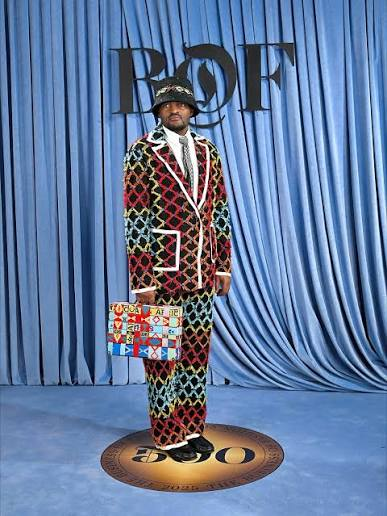
The collection brought together different cultural influences through textiles, patterns, colours and silhouettes, creating a visual conversation between tradition and contemporary fashion.
CULTURE IN MOTION
Music, rhythm and movement were important themes within the Siyi-Kulture collection.
Ngxokolo explored the relationship between African music, movement and fashion, translating these ideas through knitwear, beadwork and intarsia techniques.
Structured garments appeared alongside sporty tracksuit-inspired pieces, creating a dialogue between ceremonial clothing and contemporary streetwear.
The colour palette was equally expressive, featuring vibrant turquoise, yellow, black, white and other bold tones.
The collection challenged the idea that African winter fashion must conform to the darker and more restrained palettes traditionally associated with European winter collections.
Instead, it reflected the reality of South African winter, where colour, personality and cultural expression remain central to fashion.
THE POWER OF AFRICAN CRAFTSMANSHIP
One of the defining elements of MaXhosa Africa’s identity is its relationship with craftsmanship.
The brand works with local craftspeople and artisans, using textile development and traditional techniques as important components of its design process.
This approach gives fashion a wider social and cultural meaning.
Every textile technique carries knowledge.
Every pattern can carry a story.
Every handcrafted piece represents a connection between the past and the present.
The Fédération de la Haute Couture et de la Mode has highlighted MaXhosa’s work with local artisans and its efforts to preserve culture while updating traditional techniques through contemporary design.
For South Africa’s creative economy, this model demonstrates how fashion can create opportunities while contributing to the preservation and development of cultural knowledge.
REDEFINING AFRICAN LUXURY
MaXhosa Africa’s journey also raises an important question: What does African luxury look like?
For decades, global luxury fashion has largely been defined through European institutions, histories and aesthetics.
MaXhosa presents another possibility.
African luxury does not have to imitate European luxury in order to be considered sophisticated.
It can be rooted in African history, African craftsmanship and African identity while remaining contemporary and globally relevant.
This is one of the most important aspects of Ngxokolo’s work.
The brand does not simply place African patterns onto conventional fashion.
It builds its identity around African culture.
That distinction matters.
A SOUTH AFRICAN STORY WITH A GLOBAL AUDIENCE
MaXhosa’s international presence demonstrates the growing ability of South African designers to participate in global creative conversations on their own terms.
The brand has appeared on the Paris Fashion Week calendar across multiple seasons, with its Spring/Summer 2026 collection also presented as part of the official programme. Vogue described MaXhosa as the only Africa-based brand on the official Paris Fashion Week calendar and noted the brand’s long-standing commitment to cultural representation.
This continued presence gives South African fashion an opportunity to be seen not as an emerging curiosity, but as a serious contributor to the international fashion industry. It also creates visibility for African craftsmanship, textiles, design talent and creative entrepreneurship.
HERITAGE AND THE FUTURE
Perhaps the most powerful message emerging from MaXhosa Africa’s Paris journey is that heritage and innovation do not have to exist in opposition. Heritage can be the foundation for innovation.
Tradition can inspire new technology. Indigenous patterns can become contemporary design. Local craftsmanship can become international luxury. And African identity can become a global creative language.
This philosophy is particularly relevant to a new generation of African creatives who are searching for ways to transform their cultural backgrounds into sustainable creative careers. MaXhosa demonstrates that authenticity does not necessarily limit international appeal. It can strengthen it.
BUILDING AN AFRICAN HERITAGE BRAND
Laduma Ngxokolo has spoken about his ambition to build an African heritage brand rather than simply create a fashion label. That distinction is important. A fashion label produces collections.
A heritage brand builds an identity that can survive beyond individual collections. It creates a relationship between people, place, history, craftsmanship and contemporary culture. The Fédération de la Haute Couture et de la Mode describes Ngxokolo’s work as an effort to build an African heritage brand, with MaXhosa continuing to develop textiles and collaborate with local artisans.
This approach positions MaXhosa as part of a much larger African creative economy.
INSPIRATION FOR YOUNG AFRICAN CREATIVES
The MaXhosa story carries an important lesson for young creatives across Africa. Global success does not necessarily require abandoning local identity. A designer can be proudly South African and still participate in international fashion. A filmmaker can tell African stories for global audiences. A musician can build international recognition while using African languages. A writer can tell local stories that speak to universal experiences. The creative industries provide opportunities for Africa to export ideas, culture and intellectual property rather than simply raw materials. MaXhosa Africa represents this possibility through fashion.
PARIS AS A PLATFORM, AFRICA AS THE MESSAGE
The significance of MaXhosa’s presence in Paris ultimately goes beyond the runway. Paris is the platform. Africa is the message. South Africa is the foundation.
And culture is the creative language.
The Siyi-Kulture collection communicates an important idea: African culture does not need permission to evolve It does not need to be simplified for international audiences.
It can remain complex, colourful, diverse and authentic.
By presenting Zulu, Xhosa, Pedi, Tsonga, Swati and other cultural influences within one contemporary collection, MaXhosa demonstrates that African identity can be both deeply rooted and constantly evolving.
THE ROAD AHEAD
MaXhosa Africa’s continued presence at Paris Fashion Week signals an important moment for South African fashion.
The brand’s journey demonstrates the potential of combining cultural heritage with entrepreneurship, craftsmanship, innovation and global ambition.
But perhaps its greatest contribution is the confidence it gives to other African creatives.
The message is clear:
You do not have to leave your culture behind to enter the global stage.
You can take your culture with you.
You can transform it.
You can build businesses around it.
And you can make the world pay attention.
From the streets of South Africa to the fashion houses of Paris, MaXhosa Africa is helping redefine what African luxury can look like.
Laduma Ngxokolo is not simply designing clothes.
He is building a cultural brand.
He is creating a bridge between heritage and modernity.
And with every collection presented on the international stage, MaXhosa Africa continues to remind the world that African culture is not merely part of the global creative conversation.
It is one of its most powerful sources.
For Mzansi Mail, the MaXhosa story represents something larger than fashion.
It is a story about South African creativity, African ownership, cultural confidence and the power of turning heritage into a global vision.
MaXhosa has taken South African culture to Paris.
Now the question is: how far can African creativity go next?
About the Author